Monday, February 11, 2013

Finding the Balance in Writing Instruction

This week, I read a passage from a book by the Buddhist nun Pema Chodron, including her chapter on the meaning of discipline. She writes: "Without discipline, we simply don't have the support we need to evolve...The discipline is to find the balance between not too tight and not too loose--between not too laid back and not too rigid. Within this structure, we proceed with compassion."

What does this have to do with writing instruction, you ask? Well, a few days ago, I emailed one of my former professors who is famous in the field of writing research, and I  asked him if there was any evidence for the "natural process" approach to writing. This approach asserts that students should write about what they want, and teachers will conference with them about what they have written. Many advocates of this approach, such as Donald Murray (1980) have asserted that teachers should not explicitly teach students the 'rules' of writing, such as organizational patterns or ways to combine sentences, because this approach can stifle the natural process of writing.

My professor told me that there was no research suggesting that this more 'open' approach to writing produced positive results. In his words: "The research basis supporting writing workshops is anecdotal, selective, and highly dubious." 

At the same time, however, I have also worked in a middle school in which teachers were required to adhere to the "Jane Schaffer" model of writing, in which almost every sentence is prescribed in the famous (or should I say "infamous") five-paragraph essay. For example, every introductory paragraph needs a thesis, then every following paragraph should include a topic sentence, with evidence, followed by explanations of how that evidence supports the topic sentence, which supports the thesis. This approach, too, failed miserably in the middle school I observed, which had the one of the lowest writing exam scores in the district. The students hated it and felt it stifled their expression.

Which brings me to my original quotation from Pema Chodron. She says that in life, having discipline means establishing structures for ourselves, but not clinging to these structures too loosely or too tightly. By analogy, the same is true for writing instruction. Research has shown that students benefit from some structure, but too much structure can become formulaic and can shut down ideas.

Where is the line? I think that it depends on the class, the teacher, and the writing assignment. I think as human beings, we tend to want answers, such as "just give me the method that works." But, in my personal philosophy, life is more contextual and shifting than that. Consequently, reflective teachers have to walk the path of "not too loose and not too tight" for each writing assignment, identifying how they can provide structure for their students while still giving them a degree of freedom. Lastly, don't forget: proceed with compassion.

P. S. As a teacher, I want to add a disclaimer that I don't intend for this posting to be an endorsement of Buddhism, nor am I against Buddhism. I said in an earlier posting that I was a wanderer, which means I read works from different world philosophies. It just so happens that Pema's quote hit me this week as I was thinking about writing instruction. :)

Monday, January 21, 2013

Introduction to SCED 4200, Spring 2013

New semester, new introduction. I actually kind of like the opportunity to blog along with each new class because I get to check in with myself and see how the ways I define myself change over time.

Two semesters ago, I taught a health major who introduced me to the book "What Happy People Know." I read it, and the author talked about how it's important to define yourself along many different dimensions. Too much faith in one dimension can lead to psychological trauma. For instance, if you ONLY define yourself as a wife, then if you get divorced you will have an especially hard time. That's why it's important to have your identity eggs in many different baskets, so to speak.

So what are the dimensions along which I define myself? I am a yogi and a continual searcher. I am a writer, a data analyst, a scholar. I am an assistant professor trying to get tenure, and gaining confidence with each new publication. I am a teacher. I am a sister, a daughter, a neighbor, a friend, an aunt, and--for the first time in my 30-some-odd-year-old life--a sweetheart. I am a Georgia bulldog, through and through, as well as a Teavana Junkie.

What is literacy to me? Literacy is dialogue. Literacy is not something that happens in an individual mind, but rather it always happens in and through dialogue. This dialogue includes inner dialogues with our past experiences, external dialogues with others, as well as dialogues with the texts we are reading. These dialogues don't work when they feel like monologues. For instance, they don't work when it feels like reading and learning is a one-way street that moves only from the teacher to the student. Instead, literacy and learning work best when many different voices are at the table, with each visibly acknowledged, addressed, and valued.


Thursday, October 18, 2012

Writing and Me

As an elementary student, I used to love, love, love to write. I remember that much of my spare time in the fourth grade was spent writing limericks, poems, and short stories. Actually, these stories weren't so short--sometimes they were up to 20 pages.  I remember that my fifth grade teacher, Mrs. Seamons, wrote "You truly know how to paint pictures with words" on a personal narrative that I wrote in her class, and I felt like I had great feedback from teachers that solidified my identity as a writer.

By the time I hit the ninth grade, for several years I had been mulling over what was (in my mind at least) a brilliant psychological thriller, born from my intense love of mysteries and horror stories in the ilk of Nancy Drew and Alfred Hitchcock. The protagonist of this thriller was actually a murderer but had a split personality and didn't know it. I spent months putting my thoughts into words as I wrote this story, prided myself that plot was really subtle but still engaging. I can't remember all the details now, but I do remember that a red handkerchief was the clue that ended up tying the story all together.

Well, I remember Mrs. Brown, my ninth-grade English teacher, returning the story to me with a big A- written on the top, and all it said was something like, "So the protagonist is the killer?" I remember that she also gave our class a lecture on how this set of short stories was the darkest set of short stories she had read in her life, and she was worried for the future of America if the youth like us were so obsessed with madness and darkness.

From that time on, I pretty much gave up on creative writing. I stopped writing poems, limericks, short stories. When I took a creative writing class in high school, I felt like it was more of a chore than a method of self-expression. I don't mean to be a "teacher blamer" or anything, but teachers have a lot of authority in our lives, and for me, the fact that I got an A- on a story that took me years to conceptualize and months to write meant that I must not have been very good at creative writing.

I still do a whole lot of non-fiction writing, however. Mostly writing up the results of research for publication or grant applications, much as one is expected to do when you are an academic. Looking back on the situation now that I have been a teacher, I realize that teachers actually are not the ultimate authority. Since then, I have had people critique my writing in harsh and severe ways--saying much worse things to me than "You deserve an A-", but other people have deemed the same piece of writing good enough to publish in a top-tier journal. So I have come to realize that one person's opinion cannot constitute the absolute authority on my writing. However, I think I had to be at a certain point in my own personal emotional development to be able to take criticism without internalizing it too much as the product of my own personal failings. Still, though, I will say that any time I get an article rejection or a particularly discouraging review I still have to steel up my backbone and tap into reserves of emotional fortitude.

What this experience taught me is that teachers and their feedback can have huge consequences in the identity development of their students--they can foster identities as "good writers" or "bad writers," for example. I know that we, as teachers, may grade 200 assignments at any one time, and it's easy to become mechanical about how we respond to students without realizing that every one comment we give can make a real difference in their psyche. It's important for us to take our charge as teachers seriously, to wear the teaching mantle well, if you will. For the sake of our developing students.

Wednesday, October 3, 2012

The Ideal and the Real

I write this post in the context of having a herniated disc in my back, lying on my bed with my legs propped up. Over the last several weeks, I've been spending most of time either lying down or standing with small periods of time spent sitting. I've injured my back before, and I think teaching is actually the perfect profession for me because it does not require a lot of sitting. 

This situation has prompted me to think about the ideal and the real in teaching. When I think of the ideal, I think of the following: what we know we SHOULD do, what we want to do, who we want to be. For instance, maybe we know that we should do hands-on minds-on lessons, that we should provide engaging before reading instruction prior to reading texts with our students, that we should plan engaging topics for discussion and come every day prepared, that we should read and comment on our students' assignments in constructive and substantive ways, that we should be ceaselessly positive and caring. We know we should do that. We have an ideal version of ourselves as teachers, as the people we aspire to be. 

Then, reality hits. We have to spend hours on our backs because we have a herniated disc. A family member gets sick. Or even simply--we want to spend time with loved ones, such as our children, and we find ourselves out of time and unable to reach the ideal.

I struggle with this tension constantly. I still have assignments to grade for tonight, a tenure/promotion binder to finish, a letter of intention for a grant application due tomorrow, and a lesson to plan. And my back exercises to do and my health to manage. Maybe I'm just a poor time manager, but I find myself in this type of situation a lot.

I think that previously, I would have sacrificed my sleep to get everything done, but now I have a greater concern for my health and am not willing to do that anymore.

I know this is a blog about literacy--but I think that who we are as teachers is related to everything, including the quality of instruction (and literacy instruction) to provide. I can imagine myself again as a secondary teacher, knowing that I SHOULD do things like provide before reading instruction but being mentally tired and not wanting to think about it. On the other hand, I don't think it's fair to let myself (or other teachers) off the hook by saying, "Oh, you're tired," or "Oh, your back is sore, so you don't have to provide quality instruction to your students."

I don't think there is any easy solution when I think about the tension between the ideal and the real. I have been teaching for 15 years and still this is something I struggle with on an ongoing basis. But I do think that by sharing with each other--our struggles and triumphs, our lesson plans, our frustrations, that we can come to a more comfortable place in our minds, our hearts, and our teaching. 


Saturday, September 8, 2012

Course Introduction: SCED 4200

I'm Amy Alexandra, a new faculty member at Utah State University. Formerly, I was a proud Georgia Bulldog. I graduated from the University of Georgia in Athens where Football was King and where a dozen coffee shops held a non-stop stream of students writing their dissertations or studying for exams until the wee hours of the morning. I have often said I would never have finished my dissertation without Jittery Joe's, the coffee shop where you would almost always find me working at 6 in the morning, at 11:30 at night, and at many times in between. 
I say "formerly" I was a proud Georgia Bulldog, but now I think I am slowly becoming a proud Utah Aggie. I have to admit, though, that I actually had to look up "Aggie" before I even knew what it was. 

Prior to being an Aggie and a Bulldog, I was a Spartan. Murray Spartan, that is. A fourth-generation student at Murray High School. There, I had amazing English and history teachers (some of whom my parents also had) who inspired me to want to become a teacher. The most inspirational teacher I've ever had was Diana LeBaron-Bass who taught AP European History. In her class, we did everything from painting the Sistine Chapel under our desks, to re-enacting the class struggles that led to the French Revolution, to holding UN meetings, to moving little plastic soldiers across a 10-foot map of Europe, to putting Otto Bismarck on trial, and so much more. I felt like every day in her class was a fun and meaningful adventure. Her class sparked something in me, showing me the magic that is possible through education and strengthening my resolve to become a teacher. 

It's both very humbling and interesting to me to be a content area literacy teacher. I know a lot about adolescent literacy and learning, but as I continue to have different majors I realize that I have a TREMENDOUS deal to learn about subjects such as engineering and music. Because I have so many majors--from agriculture to FACS--I know that even if I took college classes in my students' majors (which I have contemplated doing) that I would not have a long enough lifetime to learn about it all. That's what really keeps me humble...the fact that I teach a class where I am constantly learning from my students who have so much knowledge. At the same time, though, this class is very personally stimulating and enriching to me because I am always learning something new about welding, circuits, or tempo every semester. And I like that a lot.

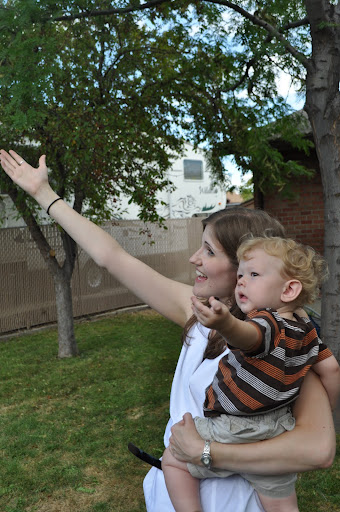
On a personal note, I have the world's cutest nephew. Well, at least he is in my eyes. Here we are looking at airplanes. 

I can tell from reading everybody's blogs already that I am really going to enjoy working with this course! 


Thursday, March 29, 2012

Emotional Lives of Teachers


Last week in class, we were talking about the affective dimensions of teaching--or the things that we do that can influence students' motivation and desire to participate in our respective disciplines.

Although I think it's very true that as teachers, we need to attend to our students' social and emotional needs, I think it's equally as true that we need to attend to our own.

My grandmother died last semester. I lived with her while growing up and loved her ferociously. In fact--I was named after her--she's the "Alexandra" in my name. After her death, I felt very irritable--not with my students, but just with life in general--and it was hard for me to grade and to focus. When you're a teacher, however, the show must go on. You have 31, or 210, or however many other students waiting and ready to go for you as soon as class starts the next day. And if you're "off"--then the whole class will be off.

As a teacher, then, more than many other professions, you have to be "on" to a very high extent, every day. And what happens if we don't feel "on"? What happens when we ourselves have a chronic illness, or when somebody dies, or a family member is ill?

I think it's important to acknowledge and respect our own humanity as well as our students'--to have empathy for ourselves and to structure our own time to build and nurture our souls. Take that walk instead of grading those papers, when the occasion calls for it. I think this approach will make us more empathetic to our students as well--so when they are having a rough spell, we will be more understanding of why they're irritable and it's difficult for them to complete assignments.

Monday, February 20, 2012

Knowledge of what and for what?

Recently, I had a conversation with a science teacher in which we were discussing the meaning of "scientific literacy." According to him, most teachers emphasize "knowledge of" their disciplines--in fact, it seems to me that this approach is highly emphasized through state standards and tests. For instance, you might seek for students to develop a knowledge of how to divide fractions; a knowledge of how to write a moving narrative; a knowledge of the different components of physical fitness; and much more.

What does learning look like when you envision learning as "knowledge for"? And what is knowledge for, anyway? In science education, some international frameworks talk about using science concepts and scientific reasoning FOR making informed decisions in everyday life. I think the same concept can be applied to most disciplines: using physical education FOR making healthy decisions in regards to diet and exercise; using art FOR analyzing the implicit messages in the visual texts that surround us daily, and so forth.

But is the only purpose of our disciplines for students to make better, more informed personal decisions in their everyday lives? Some people also think that KNOWLEDGE FOR should also encompass KNOWLEDGE FOR promoting social change and KNOWLEDGE FOR a better world. What would mathematics instruction look like if "knowledge of" statistics became "knowledge for" social change? For instance, what if students collected and analyzed statistics about a problem in their communities, and then presented graphical, numerical, and written information to their city council people and used the data to advocate for a solution to the problem?

It seems to me that every teacher implicitly enacts her or his idea of "knowledge for," whether it's "knowledge for" passing the test, "knowledge for" making informed personal decisions, "knowledge for" making the community a better place, and so forth. I think that, by articulating for ourselves "what is my discipline for?," we can structure our learning experiences so that they are more tailored to meet the goals that really matter most to us and those goals that will really matter most to our students.